
“Books Kids Want to Read” is Transforming Oakland Public School Libraries
More Than 12,000 New Books on the Shelves of Oakland School Libraries Through Program that Supports Students and Librarians
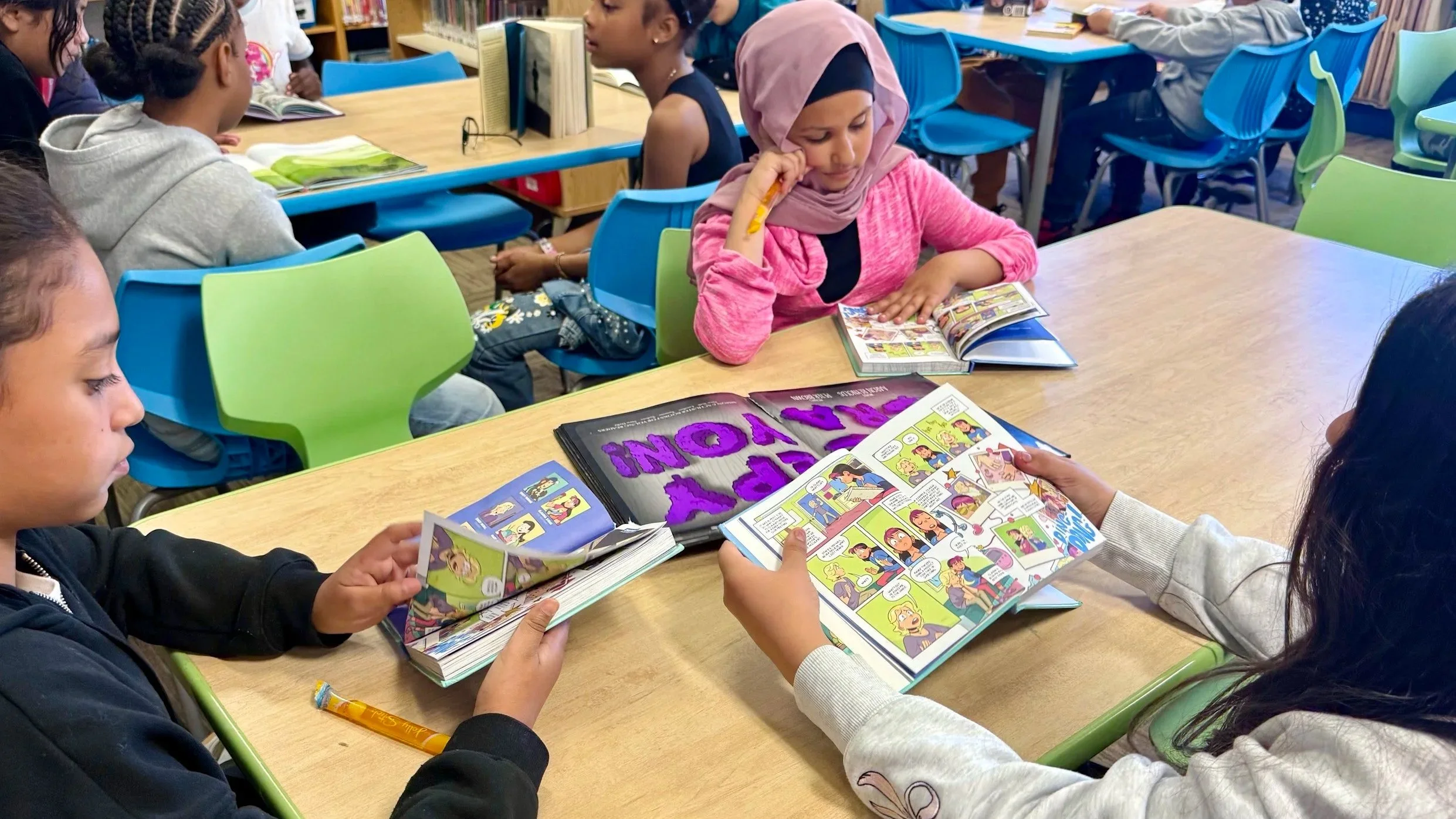
Rana keeps checking the new arrivals shelf at Fruitvale Elementary, looking for more copies of The Baby-Sitters Club. She and her friends asked the school librarian to get the latest books in the series, so they can read them at the same time and talk about them together.
"We are all so anxious, waiting for it to arrive!" Rana, a fourth-grader, said. "When it gets here, we just want to grab it, so we have more to read."
Kids counting the days until new books show up at their library is the kind of excitement around reading that “Books Kids Want to Read” (BKWTR) makes possible.
Investing in Libraries, Librarians, and Books
The premise is simple: the best way to get kids reading is with books they are excited to read. Nine out of ten kids are more likely to finish a book they have chosen for themselves. But many Oakland public school libraries are stocked with outdated books that don't reflect students' interests, languages, or lives.
Through the BKWTR initiative, Eat. Learn. Play. invests in elementary school libraries, giving librarians the resources to build collections that spark genuine excitement for reading and the flexibility to choose books that speak to the diverse interests and cultures of their school communities, in partnership with the Oakland Literacy Coalition (OLC).
As part of the application process administered by our partners at OLC, librarians analyze their collections, identify gaps, and make the case for what their specific school community needs, with professional development support from OLC and Oakland Unified School District (OUSD) library leadership.
Over the past three years, Eat. Learn. Play. has invested $240,000 in BKWTR, putting more than 12,000 new books on the shelves of 46 Oakland elementary school libraries.
Collections That Reflect the Community
When Christine Schooley first started as a librarian at Bridges Academy at Melrose, the elementary school library collection reflected a different era entirely. "This was a Polish neighborhood in the 1950’s, and we had whole sections of books on Polish immigration. I wondered, how do we still have this?"
Melrose has since become a fully bilingual elementary school, and Christine has used BKWTR funds to cull older titles from the collection and build up Spanish-language offerings to reflect that shift. She’s watched the collection transform alongside the neighborhood: "When I started, a majority of the books were white. And now, we have such better representation and choice of kids seeing themselves in books." She put it simply: "You want to learn about others, but you also want to learn about yourself. So, you need both."
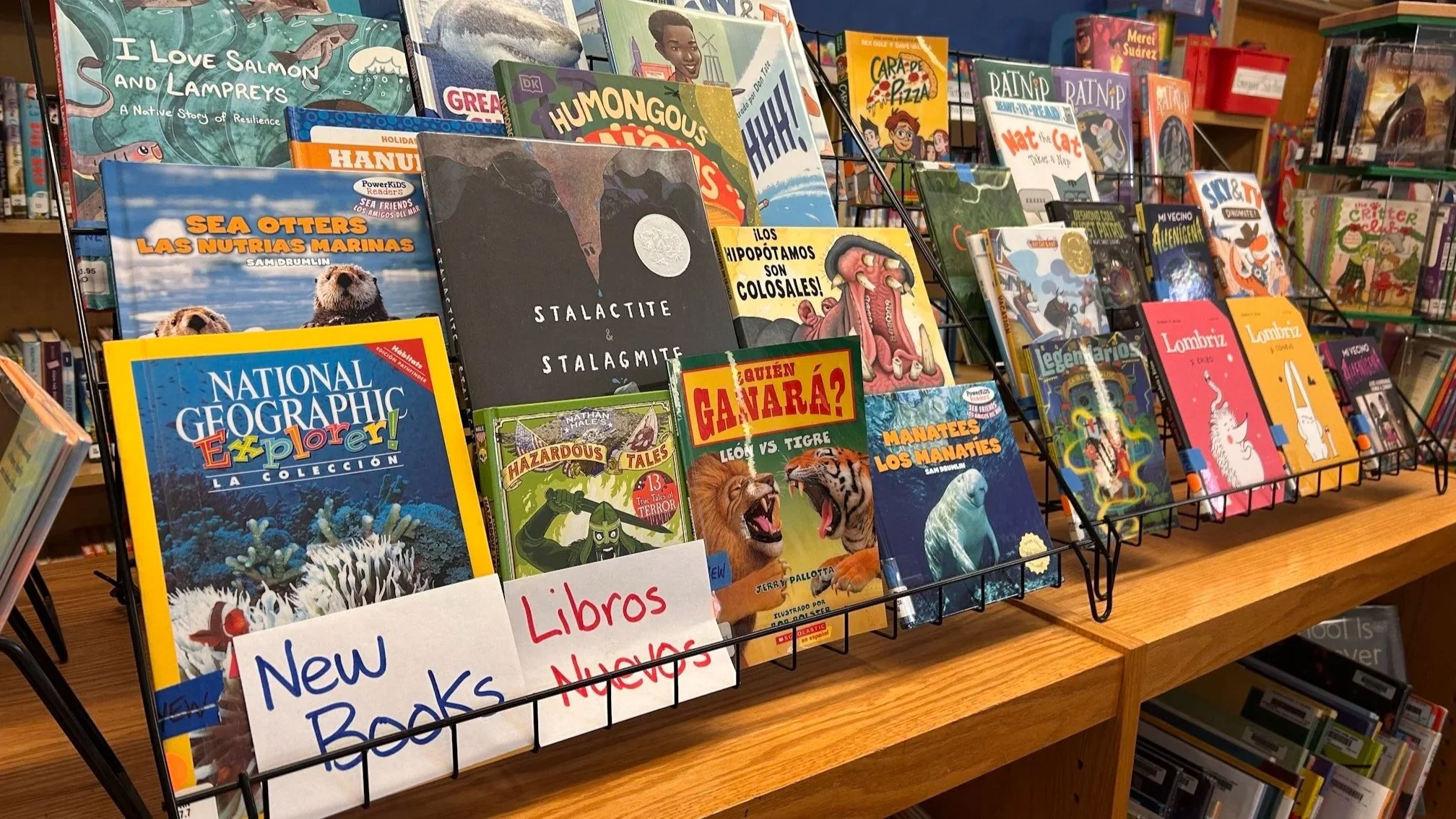
At Fruitvale Elementary, library tech Anna Giske reopened a library that had been closed for two and a half years during the pandemic. Funds from BKWTR have helped her purchase titles that reflected current school demographics, growing the bilingual collection from a single small shelf of Spanish books to robust offerings in Spanish and Arabic. She has also invested in the library’s offerings for TK and kindergarten students with a new board book section. By giving the youngest learners an accessible place to start, she hopes to nurture a lifelong love of reading.
"My idea is that the kids grow with the library," Anna explained. "They start at this little shelf, and by the time they're fifth graders, they know how to find a book, use the catalog, and are picking from the whole library."
Choosing Books with Intention
At the heart of BKWTR is the power of student choice. Librarians actively solicit requests from students, ensuring that collections reflect student interests. "I would never have conceived of some of these books," Anna reflected. "The students tell me a lot about what they want to read."
That doesn’t mean students choose everything. Librarians bring their own expertise and insight to the process. “I’m constantly trying to balance what kids want to read versus what, as a librarian, I feel is important for them to be exposed to," shared Anna.
This year, she used some of her BKWTR funds to refresh a section she hopes will achieve both: transitional chapter books, which bridge the gap from picture and early reading books to chapter books. "It's really important for students to start reading these short chapter books to get them used to reading a longer text," she said. Anna intentionally selected new titles with diverse characters, placed them prominently in the library, and has been selecting them for her read-alouds to spark student interest and instill confidence in young readers.
Representation runs through every decision. After Anna added a graphic novel about a refugee family to the library collection, a student came back and told her: "I love this book, because it has a person in it like me."
“Part of creating a safe space is that kids look around and see themselves in stories and in books. Books Kids Want to Read has really helped diversify our titles. As a librarian in Oakland, that feels really important.”
Part of Something Bigger
Before BKWTR, Christine would scour little free libraries in her downtime, trying to revive the school collection where, by her estimate, the average book was 28 years old. "It's so nice to not have the panic of wondering how I am going to get new books," Christine said.
These conditions are not unique to Melrose and Fruitvale, as Oakland school libraries across the district navigate outdated collections and tight budgets. That's why Eat. Learn. Play. is proud to have invested in 46 elementary school library collections through BKWTR so far, giving librarians like Christine and Anna the resources to transform what's on their shelves.
This intentional approach is taking root, and builds upon the holistic supports Eat. Learn. Play. provides to Oakland schools and students. At Fruitvale, students who receive one-on-one tutoring funded by Eat. Learn. Play. have their sessions in the library. Students feel safe and seen, surrounded by new books they helped pick out. Together, these programs are helping students love reading, build confidence and curiosity, and open up new possibilities.
It's just one piece of Eat. Learn. Play.'s literacy investments across OUSD elementary schools to ensure all students learn to read at or above grade level on an appropriate timeline, through high-impact tutoring, literacy coaching, and access to books. We’re proud to be supporting Oakland kids to reach their full potential and pave the way for a lifetime of learning.