
In Conversation with Lysa Ratliff, KABOOM! CEO
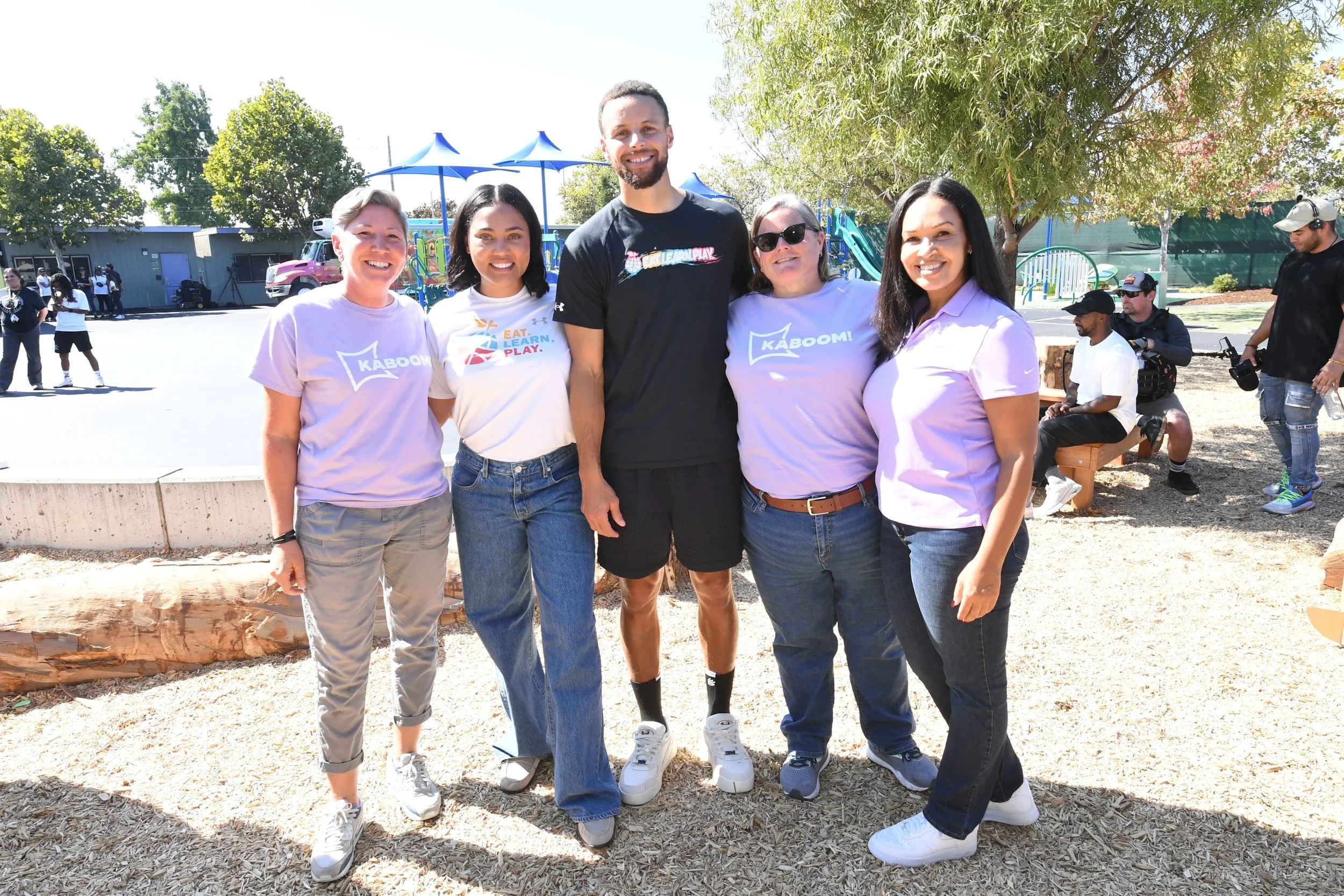
Lysa Ratliff (far right), with KABOOM! staff and Eat. Learn. Play. co-founders Ayesha and Stephen Curry
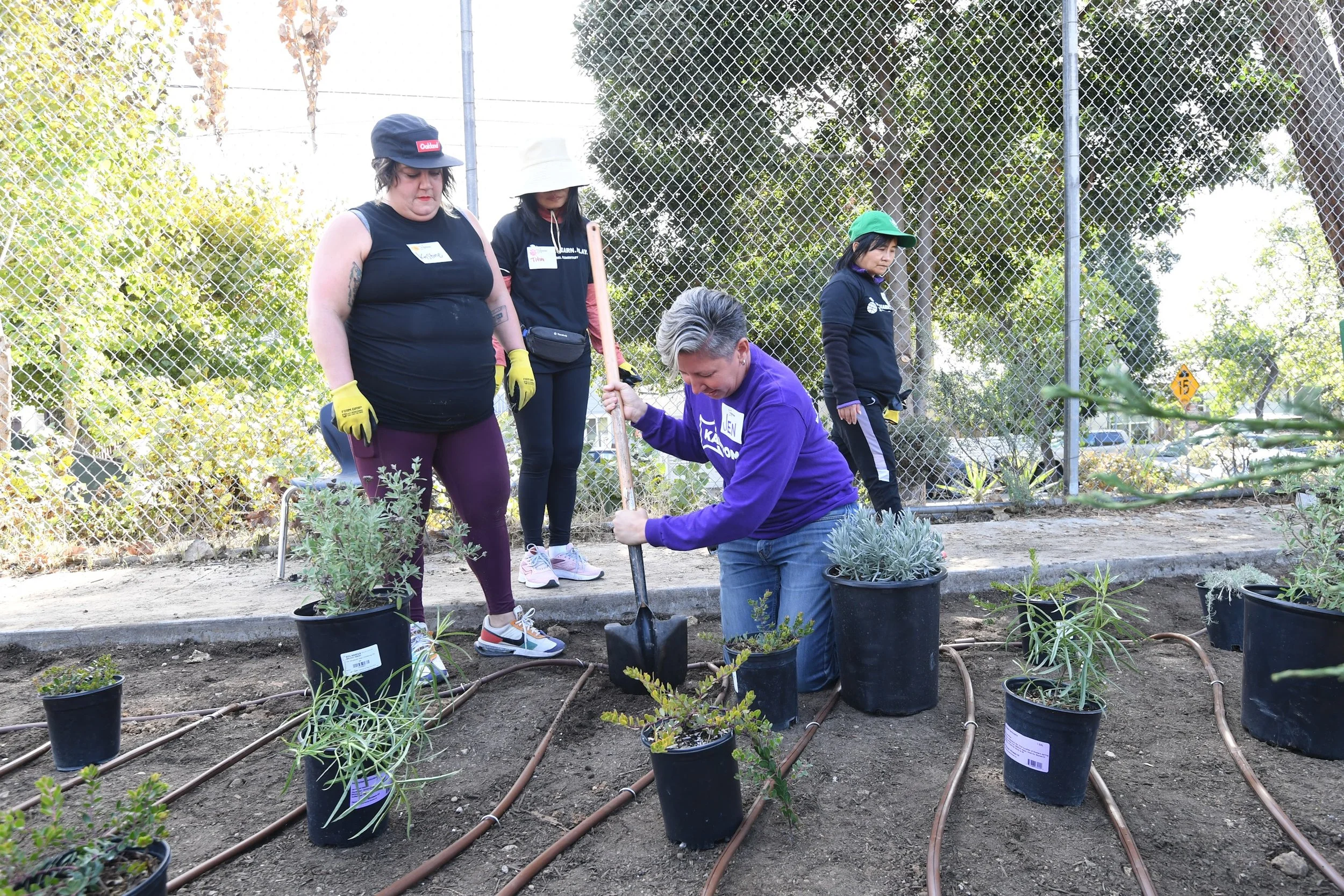
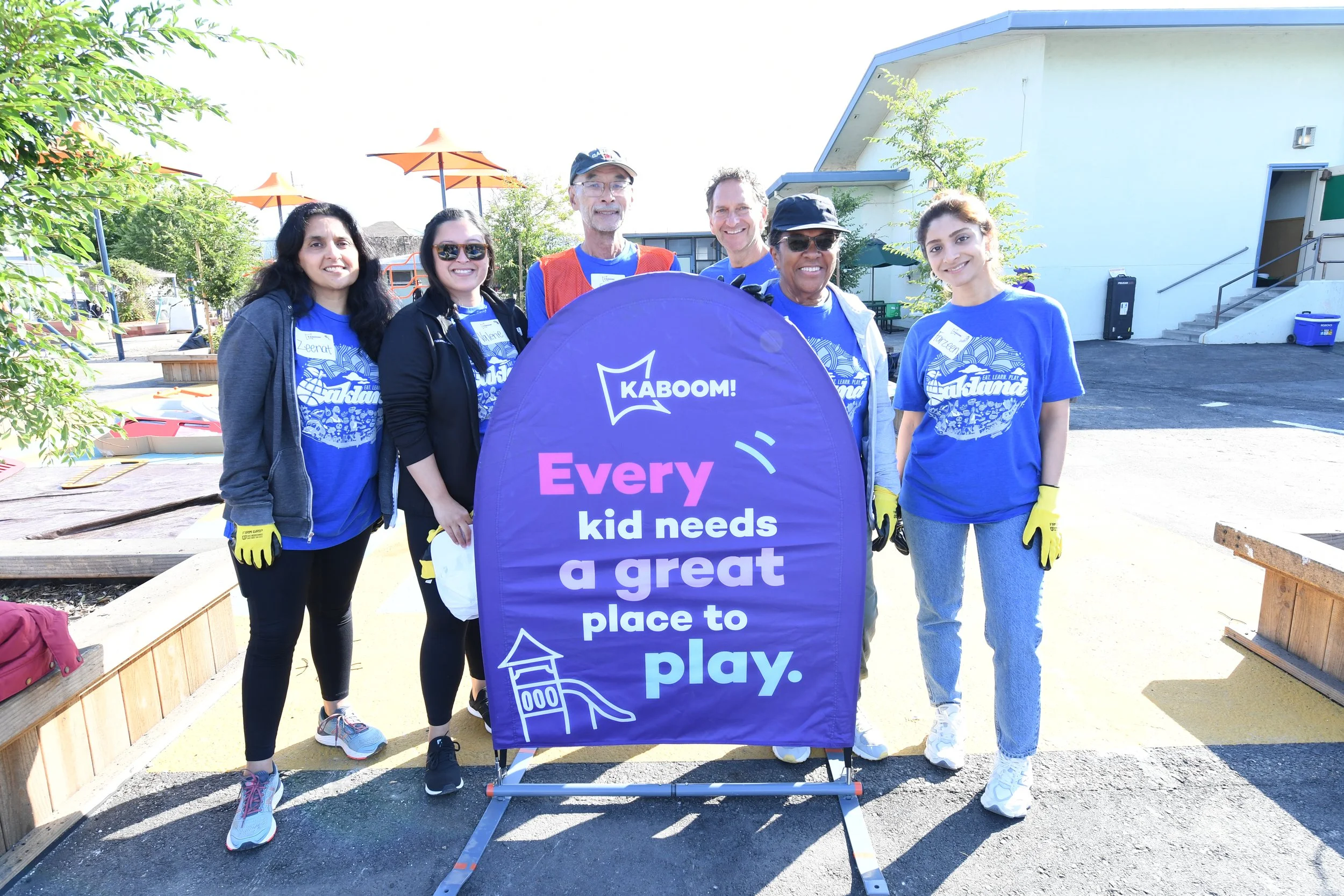
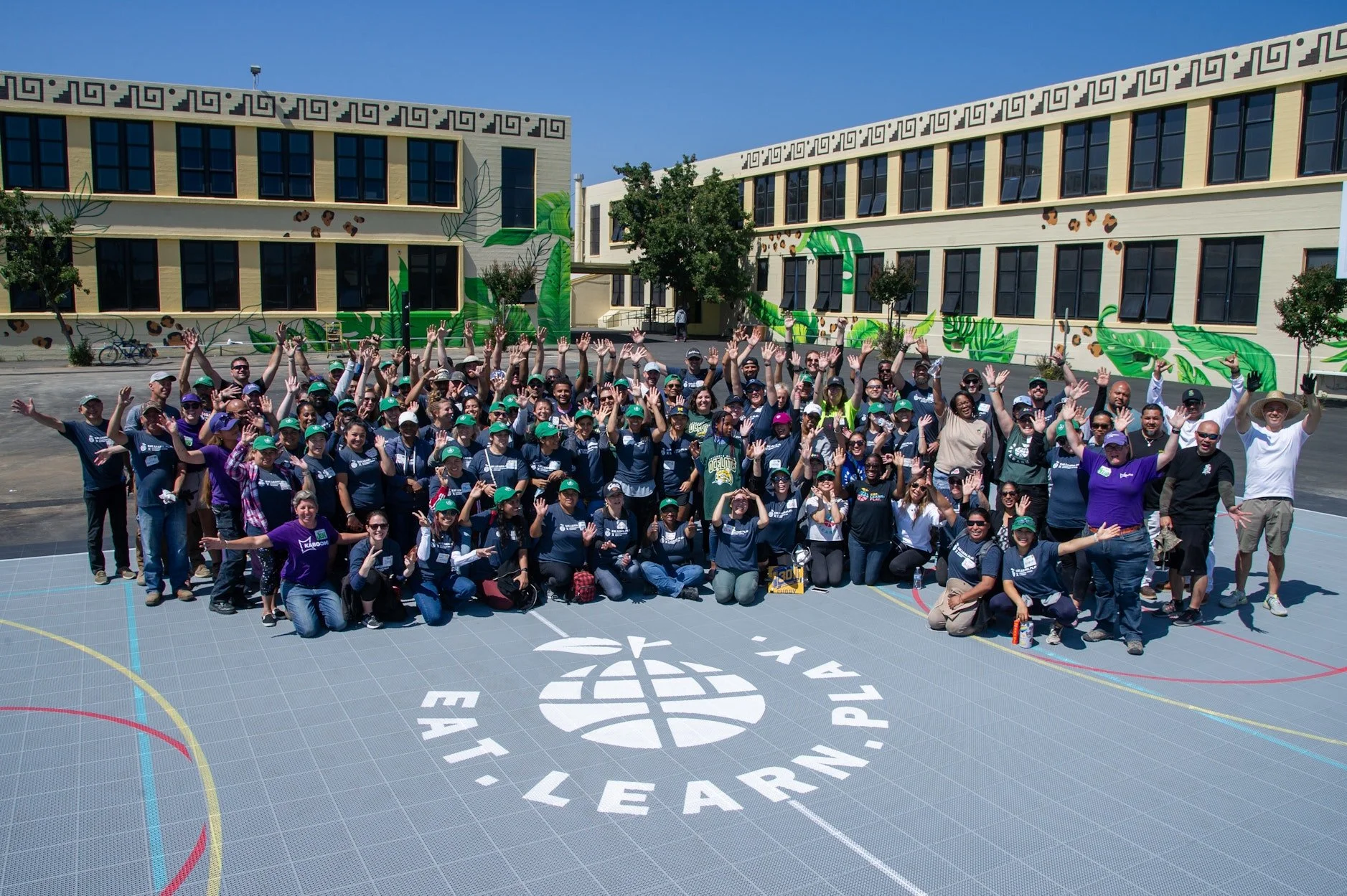
Eat. Learn. Play. has been working to create new playgrounds, nature exploration areas, multi-sport courts, teaching gardens, outdoor classrooms, and murals to transform entire schoolyards across the Oakland Unified School District into spaces that support the whole child. We are proud to partner with KABOOM!, a national nonprofit working to end playspace inequity for good, since our very first schoolyard build in 2021. Read more from Lysa Ratliff, CEO of KABOOM! about our partnership, the importance of play, and what’s to come.
Through our partnership, Eat. Learn. Play. has completed 27 schoolyard builds at elementary schools across Oakland. How has the approach evolved from our very first build together at Franklin Elementary in 2021, to where we are today?
KABOOM!’s partnership with Eat. Learn. Play. began in 2021 at Franklin Elementary, when we were focused on delivering each playground build as a single project. Franklin was one of our first living schoolyard builds; it was a larger and more innovative project than our traditional playgrounds, which included vibrant murals, multi-sport courts, and native plants and gardens that brought nature to kids who didn't live or learn near greenspaces. We didn't know it then, but Franklin would become a model for how we'd continue to work in Oakland and a blueprint for what we hope to achieve nationwide. In 2022, as we launched our 25 in 5 Initiative to End Playspace Inequity, Eat. Learn. Play. and Oakland Unified School District (OUSD) were among our first initiative partners.
We learned that public-private partnerships make progress possible on a larger scale and faster than what we could achieve alone. By pulling together our resources, expertise, and networks, we moved further, faster toward ending playspace inequity districtwide, reaching kids in every Oakland neighborhood. We also learned that there isn't one right way to partner with cities and school districts, so we must remain flexible and adapt our work in ways that support each school community the best. Our work now goes well beyond the playground: we measure playground usage, academic outcomes, and we advocate for policy change that centers kids' overall wellness. Public-private partnerships like we built in Oakland will be the way forward for all KABOOM! projects.
Community involvement and input is a key component of the approach that KABOOM! brings to the schoolyard builds. What does that look like in practice, and why is this so important?
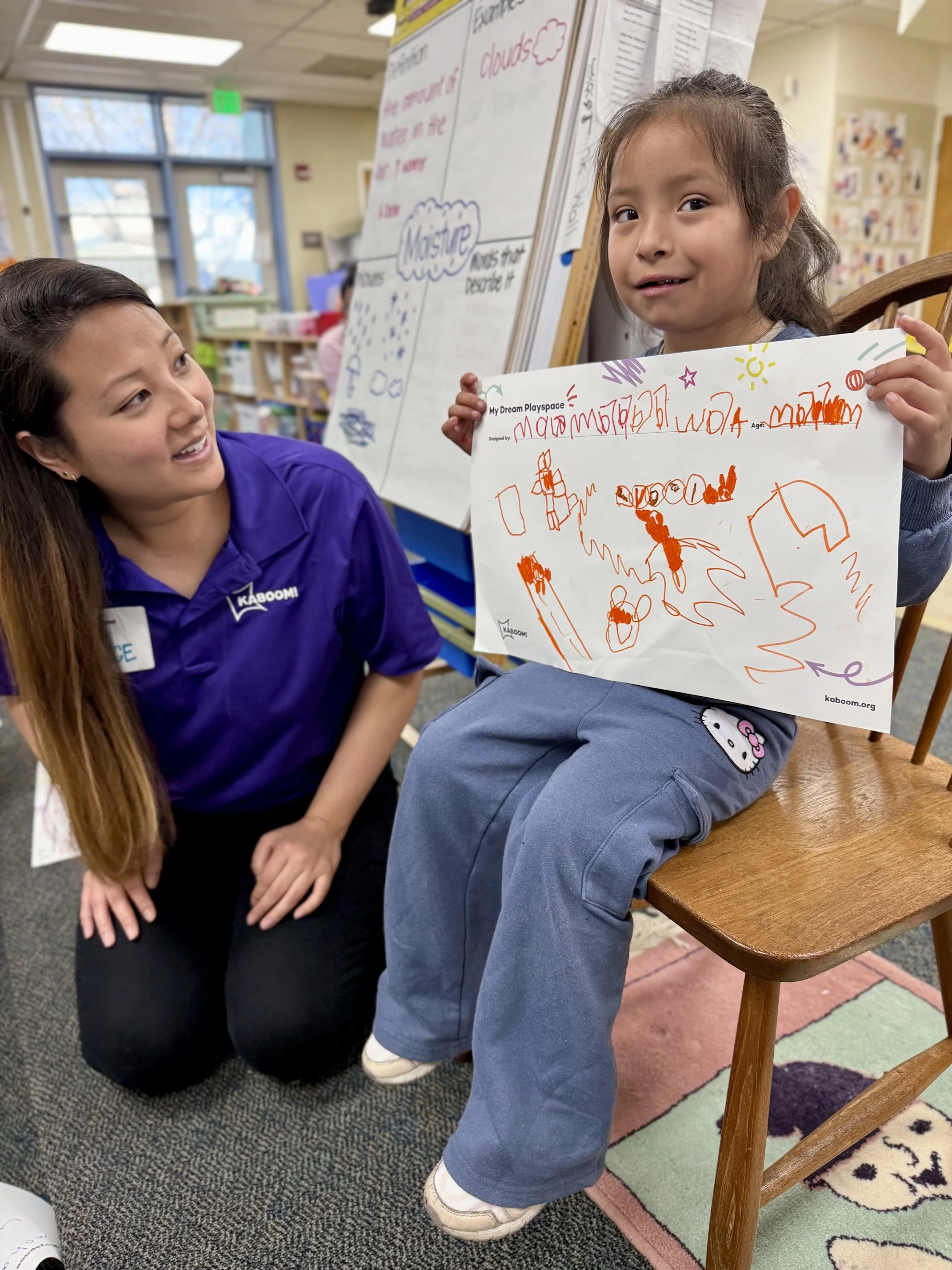
Community input is at the heart of how KABOOM! approaches every schoolyard build. We facilitate Design Day and Design Jam sessions before every schoolyard renovation, where kids and their communities share ideas for what their dream playspaces look like. It doesn't matter if a schoolyard is built or renovated, if it doesn't represent the kids and community it is intended to support, or if it doesn't feel like a welcoming and safe place to play. Every community and school has a distinct student population with different needs, so there is no one-size-fits-all approach. The ideas that come out of these sessions shape each design, so that every schoolyard reflects the kids who will actually use it.
This matters because a playground only works if kids use it. When they don't, kids miss out on the physical, mental, social, and emotional benefits of play. Mobile GPS and GIS data shows that playground usage increases in the months and years following a KABOOM! renovation, which suggests that schoolyards designed by kids and their communities are used more than other types of playgrounds. When kids help shape their spaces, they want to spend their time there, which is how a schoolyard becomes a place where they can learn, grow, and reach their fullest potential.
In KABOOM!’s State of Play report, Eat. Learn. Play. contributed a piece on the mental health benefits of play. Beyond physical activity, what are the benefits of play for children?
Play is far more than physical activity. It's a lifeline for kids; play is how kids process trauma, learn, grow, and develop, and how they build friendships and lay the foundations of who they will become as adults. Research shows that play supports brain development, builds resilience, strengthens relationships, and helps reduce the effects of toxic stress. Play also helps kids develop cognitive flexibility, emotional regulation, and social skills.
Today's kids are growing up in a more challenging time than ever before: adults around them are more divided, screens take up most of their day, they have fewer chances for unstructured play, and less access to greenspace. These pressures affect their mental and physical health. Nature-rich play is especially powerful to combat these pressures. Children who spend just 60 minutes a day in nature have a 50% lower risk of mental health issues, and green schoolyards are linked to better focus and stronger school attendance.
That is why play isn't a luxury; it's the foundation for strong physical, mental, social, and emotional health, and it's how kids grow into the future leaders of our world. Through our partnership, we're seeing what becomes possible when kids have schoolyards designed for joy, movement, and belonging. Every child deserves a place where they can simply play, connect, and grow, and every community has the power to make that happen when we all work together.
Eat. Learn. Play. and KABOOM! helped ensure the passage of California state bill SB291, which ensures that all children receive 30 minutes of recess during the school day for all of California’s children. Why is protecting play for all kids important?
Protecting play means protecting the foundation of our kids' health and development. Over the past two decades, average daily recess in U.S. schools has dropped from 37 minutes to just 19.5, and only 12 states and Washington, D.C. have policies requiring unstructured play during the school day. At the same time, fewer than one in four kids gets the 60 minutes of daily physical activity they need. For many children, the schoolyard is their only consistent access to safe outdoor play, nature, and time with their peers, so protecting recess protects the one place many kids can count on to play.
SB 291 is a big step toward changing that for California's children. Eat. Learn. Play. and KABOOM! believe that physical activity, academic success, and mental health are deeply connected, and that kids focus better, manage stress better, and feel a stronger sense of belonging when they have time to move and play. Protecting recess is also about equity, and recess shouldn’t be taken away as a disciplinary action as sometimes still happens today. Every child deserves the same opportunity to play, no matter where they live or which school they attend.
KABOOM! is celebrating its 30th anniversary and has made incredible strides towards its mission of ending playspace inequity for good. What is your hope for what the next 30 years bring?
Our hope for the next 30 years is a country where every child, in every community, has everything they need to reach their fullest potential. After 30 years of building alongside communities, we've learned that partnership is how we get there. Our work in Oakland with Eat. Learn. Play. shows what's possible when public and private partners make a commitment to our kids, and we hope to build many more partnerships like it, in more cities and school districts across the U.S. Playspaces are essential infrastructure, as important to a child's development as any classroom, and working at the scale of whole cities and districts is how we can work faster toward ending playspace inequity for good.
We also hope to continue to grow our work beyond the playground to support the overall well-being of kids. That means investing more in measuring outcomes, so we can show how great places to play improve kids' overall health and well-being, and in policy and advocacy that protects investments in play infrastructure and prioritizes kids in every community. As we continue to work across the country, we are committed to building playspaces that lead to long-term positive outcomes for kids everywhere so they can lead happy and healthy lives. Today's kids are tomorrow's leaders, and when we invest in them, we invest in the future we all share.